As parents, we often want to keep our babies safe and that often means free of germs. Because of this, many parents ask the question, “are baby wipes antibacterial?” And “are baby wipes disinfectant?” While certain baby wipes are antibacterial, and able to inhibit the growth of bacteria on baby’s skin, they are not disinfecting.
So while baby wipes are great for diaper changes, wiping off a sticky face, and cleaning up a little spill, they shouldn’t be relied on to kill germs on hands and other surfaces. Instead of relying on baby wipes for sanitizing, parents should focus on regularly washing their hands, and their child’s, with soap and water.
WHAT’S IN A BABY WIPE?
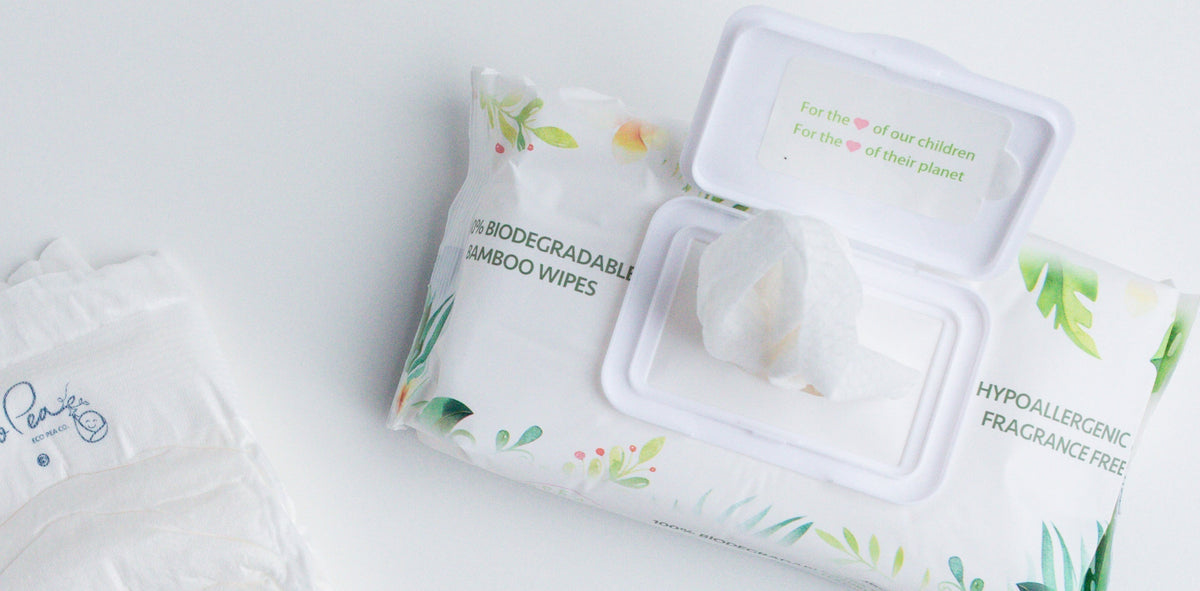
If you’re wondering what’s in baby wipes, the answer is usually ingredients specifically designed to remove urine and fecal matter from baby’s skin, while also being gentle on that skin. Baby wipes specifically made for babies with sensitive skin, like the bamboo baby wipes made by Eco Pea, contain the following ingredients:
Water (aqua). Water is a crucial ingredient in baby wipes as it’s a carrier and diluent for the other ingredients. Eco Pea utilizes extensive filtration to make sure only high-quality water is in our wipes.
Glycerin. Known as a humectant (retains moisture), glycerin is a non-toxic, viscous liquid that helps wipes hold water, ensuring they’re moist and gentle on baby’s skin. In addition, glycerin has antimicrobial and antiviral properties, providing protection from skin irritants, hydrating skin, and supporting the healing of issues like a rash.
Aloe Barbadensis Leaf Extract. The botanical name for aloe vera, aloe barbadensis, is a powerful, natural skin-conditioning agent that has been used medicinally for centuries, as it has wound-healing properties. It’s especially beneficial as a baby wipe ingredient because it has a moisturizing and anti-inflammatory effect, and leaves behind a protective layer on the skin after drying. This protective layer can be supportive in the prevention and/or healing of a diaper rash.
Gluconolactone. This very gentle preservative has antimicrobial and antiseptic properties, working wonders at inhibiting the growth of bacteria on our wipes. It’s also been found to hydrate the skin, is ideal for sensitive skin, and has antioxidant properties, meaning it can neutralize free radicals which can be harmful.
Sodium Benzoate. A preservative that prevents the deterioration of our wipes, sodium benzoate is an odorless, crystalline powder made by combining benzoic acid and sodium hydroxide. Sodium benzoate is often used in place of potentially harmful ingredients like phenoxyethanol, benzyl alcohol, and parabens.
Calcium Gluconate. Our wipes include calcium gluconate, which is the gluconate salt of calcium, as it’s an effective skin-soothing agent and has restorative and moisturizing properties.
Coco-Glucoside. This is a gentle surfactant made by a chemical reaction between glucose and coconut oil-derived ingredients. It’s ideal for sensitive skin and used to support the cleansing power of the wipes, specifically in helping to remove oily molecules from fecal matter (less wiping!).
Citric Acid. A mild, organic acid, citric acid is effective at regulating the pH in our wipes, which supports healthy infant skin by helping to maintain its natural pH balance. Essentially, it helps to reduce the occurrence of diaper rash.
Notice that this list doesn’t contain any germ killing disinfectants. This is because high-quality baby wipes are designed to do the job they’re made for – gently cleansing and nurturing the skin in baby's diaper area. Pairing gentle wipes with non-toxic diapers helps keep that whole area calm and rash-free.
ARE BABY WIPES DISINFECTANT?
So, do baby wipes disinfect? The answer is no. As ingredients like alcohol and sodium hypochlorite are prime ingredients in disinfectant wipes, and baby wipes contain no sodium hypochlorite and little to no alcohol, they don’t meet the criteria of a disinfectant. For example, to be considered sanitizing, a product must be composed of 60%, or more, of alcohol. If baby wipes contained this much alcohol they’d be way too harsh and burn a baby's skin, especially considering the number of diaper changes.
But, can you use baby wipes to clean skin? While you can’t use baby wipes to kill germs on the skin, you can absolutely use baby wipes to remove oily molecules from fecal matter, wipe away urine, wipe sticky fingers and faces and clean up small spills.
ARE BABY WIPES HYPOALLERGENIC?
While baby wipes aren’t a disinfectant, it is important to note that many are hypoallergenic. If something is hypoallergenic, it’s unlikely to cause an allergic reaction. So why choose hypoallergenic baby wipes? The reason is that because babies are often more likely to have an allergic reaction to something than adults, minimizing their exposure to products that can cause an unpleasant reaction is wise. And because babies are typically exposed to baby wipes multiple times a day, selecting a product that has a low chance of causing an allergic reaction can help ensure they remain happy and healthy.
WHAT DISINFECTANT WIPES ARE SAFE FOR BABIES?
There aren’t any disinfectant wipes that are safe for babies. Because their skin is so sensitive and prone to allergic reactions to harsh chemicals, disinfectants on baby’s skin, especially their bottoms, is a no-go.
HOW TO KEEP YOUR BABY CLEAN
Now that you know that baby wipes won’t do the trick for disinfecting hands and surfaces, let’s look at what can be done to keep you and your child safe from germs.
- Regularly wash your hands. Nothing can beat the efficacy of good old fashion hand washing, for both you and your child. To properly wash your hands, wet your hands with warm water, apply soap, then lather your hands for at least 20-seconds. Be sure to scrub the back of your hands and palms, between your fingers, and under your fingernails. Then, thoroughly rinse off your hands and dry.
To encourage your child to participate in this essential activity, make up a fun song (that lasts at least 20-seconds) that you can sing together when washing their hands.
While it’s never a bad time to wash hands, it’s especially important before meals and after a diaper change.
- Ensure everyone that touches baby washes their hands first. Even when your child is out of infancy, it can be helpful to request that everyone who holds, feeds, or plays with them first washes their hands.
- Avoid touching your face. While it’s hard to prevent a child from touching their face, you can encourage them to avoid this act after touching surfaces in the bathroom, or in public. In addition, wash their hands as soon as possible after they touch any unsanitary surfaces.
- Wash sheets once a week. As drool, boogers, sweat, urine, and fecal matter can all find their way into baby’s sheets, it’s best to wash their bedding at least once a week, and more if their diaper leaked in the crib.
- Have a “shoes off” policy. Minimize the amount of germs that make it into your house by asking all members of your household, and guests, to take their shoes off before coming inside. As baby’s often scoot around on the floor, getting exposed to whatever was on the bottom of shoes, this shoes off rule can do wonders for keeping your baby clean.
Don’t Stress
When opting to keep things clean, it's important to remember that babies are going to get messy. They put things in their mouths, crawl all over the floor and want to explore ev-er-y-thing.
Try not to stress too much about over sanitizing and simply practice regular and thorough hand washing and personal hygiene along with healthy practices at home. And keeping gentle, hypoallergenic baby wipes handy, can be helpful in removing surface dirt and germs from hands and surfaces in between these washes.
Key Insights
So, do baby wipes kill bacteria? While baby wipes don’t contain ingredients like alcohol and sodium hypochlorite that are common in disinfectants and sanitizers, they can help keep your baby’s skin clean. Eco Pea Co. natural baby wipes contain ingredients like water and decyl glucoside that help clean babies’ sensitive skin without irritating it. Our natural baby wipes are designed to soothe and nourish sensitive skin thanks to ingredients like aloe and cucumber extract.
You can also take steps to keep your baby clean and healthy without using antibacterial wipes. Washing your hands before touching your baby is one of the best ways to prevent the spread of germs. You should also wash your sheets once a week and avoid wearing shoes in your household to create a clean environment. And remember, being exposed to germs is a natural part of your baby developing their immune system.
FAQ
What should I use to clean my baby’s face and hands?
EcoPeaCo. natural baby wipes are a simple and effective way to clean your baby’s face and hands, but you can also use water. Take a soft cloth and get it damp with warm water, then gently wipe your baby’s face and hands clean. When you’re done cleaning your baby’s face, pat it dry with a dry cloth. Avoid using facial cleansers and other products that are designed for adults. You should wipe your baby’s face and hands at least once daily, focusing on the area around the eyes, mouth, and nose.
Is it safe to use baby wipes on pacifiers?
As long as you’re using natural baby wipes that don’t contain any harmful ingredients, it’s safe to use baby wipes to clean a pacifier. EcoPeaCo. natural baby wipes are made with bamboo and other natural ingredients, which means they’re safe for use on pacifiers and baby toys. You can rinse your baby’s pacifier after cleaning it with a bamboo baby wipe to remove anything that’s left behind. Allow the pacifier to dry completely or wipe it with a dry cloth before using it again.